



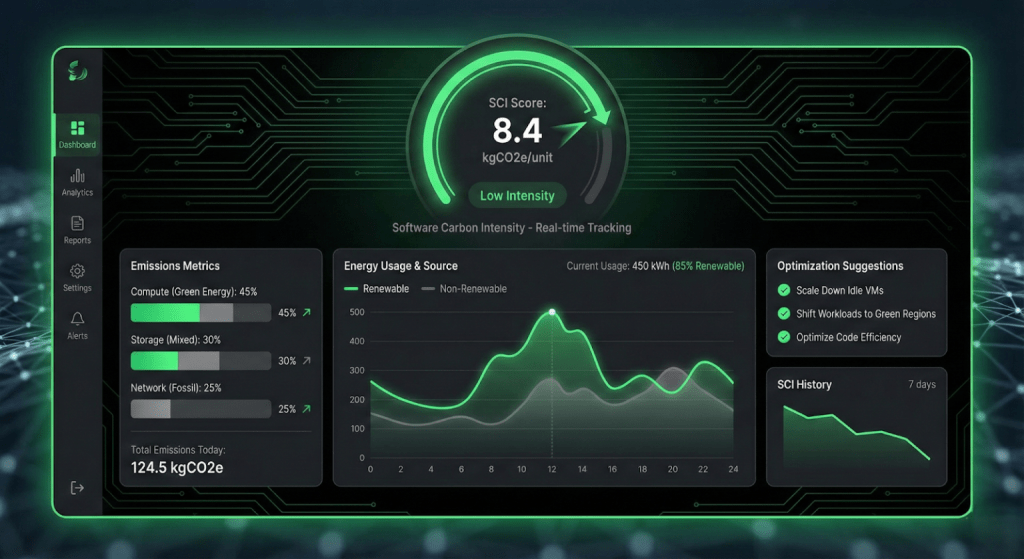
The digital world feels invisible:fast, convenient, and endlessly scalable. But behind every scroll, tap, and server call lies a hidden cost. As the internet grows, its energy consumption grows with it, and the numbers are staggering.
Today, the global digital ecosystem is responsible for nearly 4% of worldwide CO₂ emissions, which puts it on the same scale as the aviation industry. If the internet were a country, it would rank as the fifth-largest consumer of electricity. And websites—yes, even simple landing pages—play a significant part in this rising footprint.
By 2030, experts estimate that digital emissions could surge by up to 60% if nothing changes.
This is why 2025 is witnessing a shift: green coding is no longer a niche practice—it’s becoming a professional responsibility.
But what does it really mean to “green” your code? How do you measure the emissions of something as intangible as a website? And how can developers actually bring those numbers down?
Let’s make it concrete.
Understanding Carbon-Aware Computing
Carbon-aware computing is one of the most transformative ideas in sustainable tech today. At its core, the principle is simple:
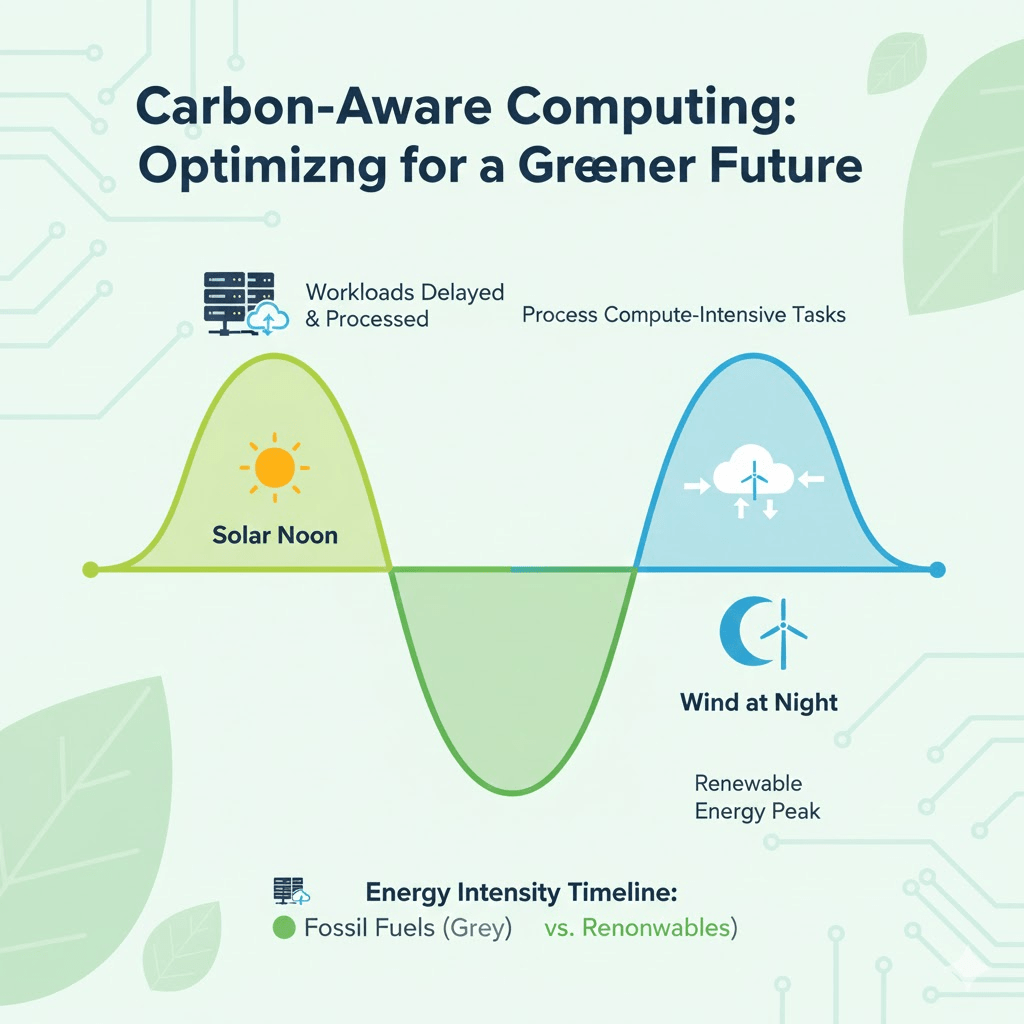
Do energy-intensive tasks when the grid is using cleaner energy.
Instead of executing everything instantly,which is the default behavior of traditional systems,carbon-aware systems look at real-time carbon intensity data. If renewable energy peaks (solar at noon, wind at night, hydro during rainy seasons), the system shifts demanding tasks to those windows.
This will involve exercise such as:
- Large-scale data processing
- Training AI models
- Video rendering
- Scheduling backups
- Cron jobs
performed when the carbon cost is at its lowest.
A Microsoft study showed that shifting just 30% of workloads to low-carbon windows reduced emissions by up to 45% without any impact on user experience.
Carbon-aware computing proves one thing:
Besides, sustainability does not always have to mean sacrifice-just smarter timing.
The SCI Score: Your Metric of Sustainability as a Developer
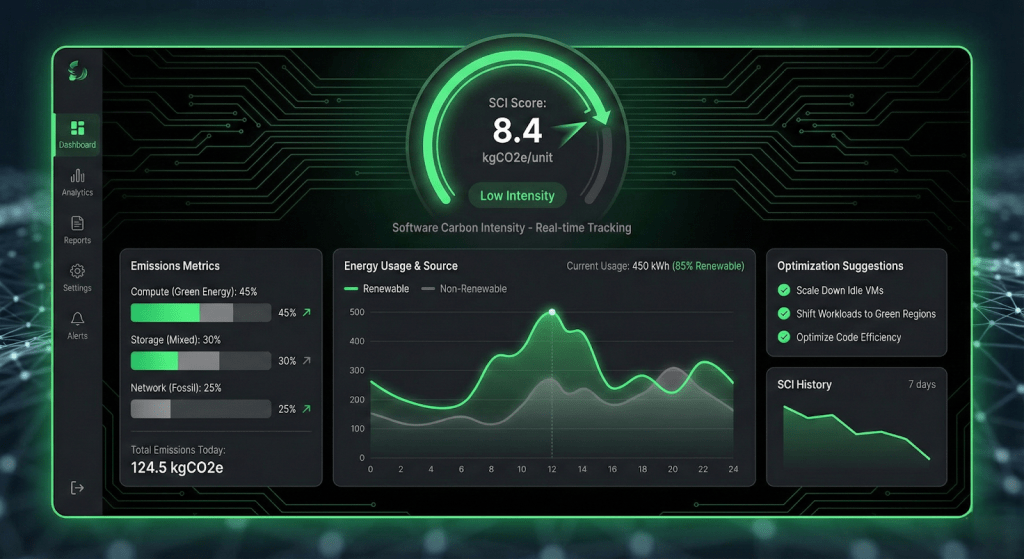
One of the biggest advancements in digital sustainability is the SCI (Software Carbon Intensity) score, introduced by the Green Software Foundation.
The score of the SCI stipulates the amount of CO₂ your software is avoiding due to:
Energy consumption
Hardware efficiency
Network consumption
Carbon intensity of the electricity consumed
What’s valuable with the score of SCI is not really about measurement but accountability.
Accordingly, the companies should start accounting for the SCI from 2025 as follows:
- Google PageSpeed
- Core Web Vitals
- Accessibility Score
- Security auditing
A growing number of agencies, SaaS platforms, and enterprises now include SCI in RFPs and vendor assessments.
And with countries tightening climate policies, the SCI score may soon become a requirement for digital compliance—similar to GDPR.
We want to be showing the clients that, for example, your websites load not only faster but
that they load cleaner.
It creates a competitive advantage.
Where a Website’s Carbon Footprint Actually Comes From
Most developers underestimate how many layers of a website create emissions. In reality, almost every byte counts.
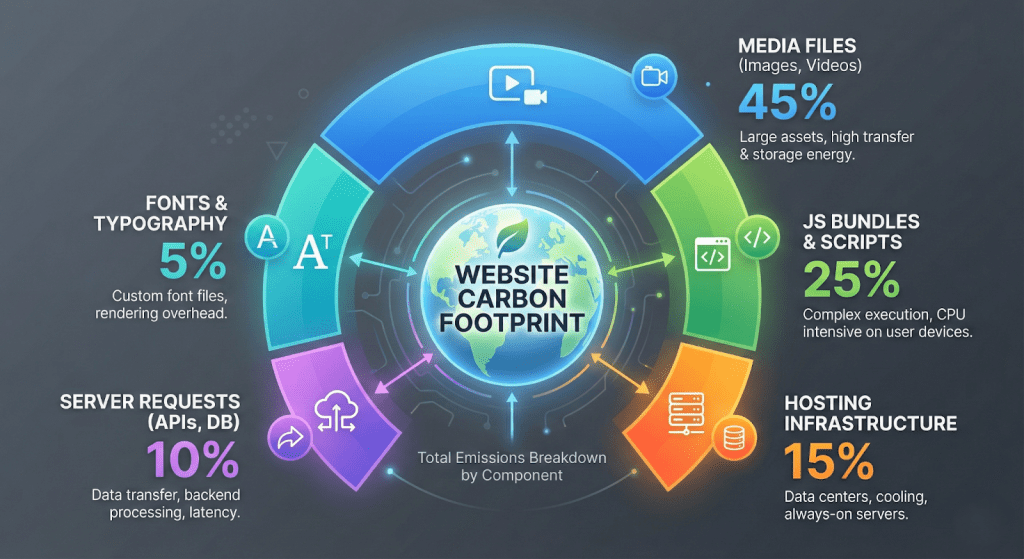
The carbon footprint includes the following:
1. Media Weight
Over 50% of the size in an average web page contains images.
Heavy images mean heavy decoding and heavy bandwidth means just heavy emissions.
2. JavaScript Bloat
Modern JS-heavy websites ship 300–700 KB of JavaScript on average, but the parsing and execution cost is often higher than the download size.
That’s every needless kilobyte burning energy.
3. Request to Server
Each request activates routers, CDNs, servers, and data centers—consuming electricity at each step.
Avoiding these can save a high-traffic site hundreds of kgs of CO₂ many months.
4. Fonts & Animations
Extensive use of custom fonts and micro-animations usually involves extra rendering and CPU cycles through millions of user sessions.
5. Hosting infrastructure
If your datacenter isn’t powered by renewables, your website inherits its carbon intensity.
With hundreds of thousands of visits on a given site, little inefficiencies compound greatly.
Green does not mean cutting features: It’s about waste reduction.
Code-level optimizations that reduce emissions
1. Lazy Loading That Actually Works
Lazy loading can save them from loading the elements until they actually are required.
It reduces it, if well applied:
- Initial page load
- CPU decoding
- Memory Usage
- Bandwidth Utilization
Google reported that efficient lazy loading reduces energy consumption by as much as 20% for media-heavy web pages.
2. AVIF, WebP are the current state of the art in the image formats.
AVIF files can be as much as 70% smaller than JPEGs and 40–50% smaller than PNGs. They also decode faster in modern browsers, leading to less information and lower carbon dioxide emissions. Simply changing your main image to AVIF could save several grams of CO₂ with each pageview, which adds up to hundreds of kilograms annually for a site with high traffic.
3. Eliminating Unused and Heavy JavaScript
It’s actually one of the largest contributors to digital pollution: JavaScript. Every unnecessary script forces the user’s device to: Download, Parse, Compile, and Execute. All these actions consume CPU energy.
Recent research indicates that reducing the size of the JS bundle by even 100KB can decrease energy consumption per user by 10–15%. Consider: Eliminating unused dependencies, Switching from client-side frameworks to server-side rendering, Utilizing tree-shaking, and Reducing hydration. Cleaner JavaScript equals a reduced energy impact.
4. Reducing API calls and batching requests
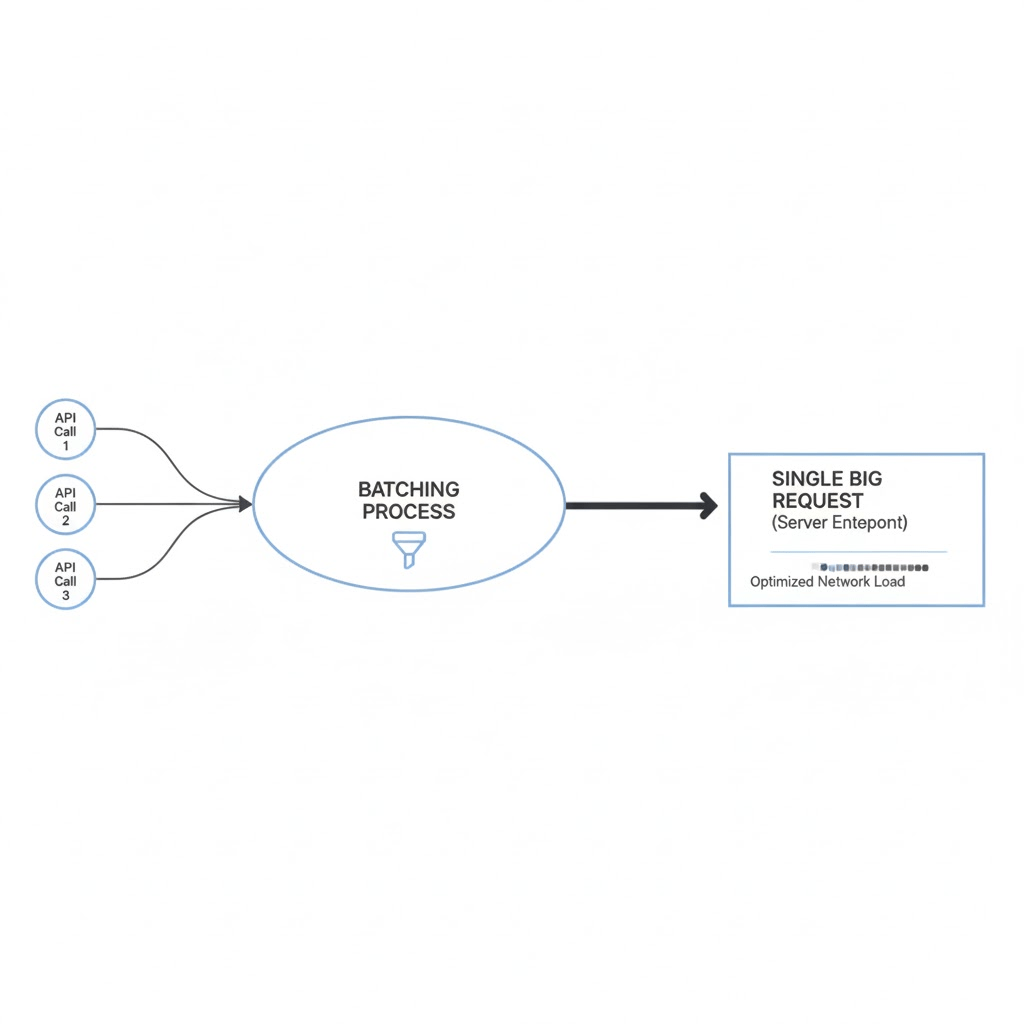
Every API call activates networking hardware, servers, and database layers. You can minimize this by: Caching responses, Debouncing user actions, Batching requests, and Implementing stale-while-revalidate patterns. This approach can alone decrease emissions by 15–30% in large applications.
Case Study: Transitioning to Green Web Hosting

One of the quickest and most impactful changes any site can undertake is moving to renewable-powered hosting. From 2024 to 2025, sustainability research revealed that: Websites switching to green hosts can cut their emissions by 40–60% almost instantly.
Renewable-powered data centers had 28% less downtime and reduced cooling needs by 12%, while also boosting resilience. Green-hosted sites also saw up to 10% performance improvement due to superior infrastructure.
Thus, being sustainable is not only ethically sound: it’s also practical, often more affordable, and sometimes even faster. Providers such as Google Cloud, AWS, and several smaller green hosts are now openly sharing their carbon footprint metrics. For most companies, the transition typically takes under a day.
Is Your Code Contributing to Pollution?

A Developer’s Duty in 2025 Green coding focuses on developing conscious software rather than flawless software. Developers have the capability to actively diminish global emissions through straightforward actions: Compressing assets, Decreasing JavaScript bulk, Choosing renewable servers, Measuring sustainability carbon impact, Implementing carbon-aware scheduling, and Reducing unnecessary network calls.
Each choice contributes to a cleaner site. By 2025, sustainability won’t only revolve around solar energy and electric vehicles; it’ll be embedded in our codebases, APIs, servers, and design strategies.
The next generation of developers will not just inquire: “How fast is my website?” but will also ask: “How clean is my website?” Because the digital landscape we construct today influences the planet we inhabit tomorrow.